Small Indian Kitchen Organisers: 5 Ways to Free Up Counter Space (Masala Racks, Jars and More)
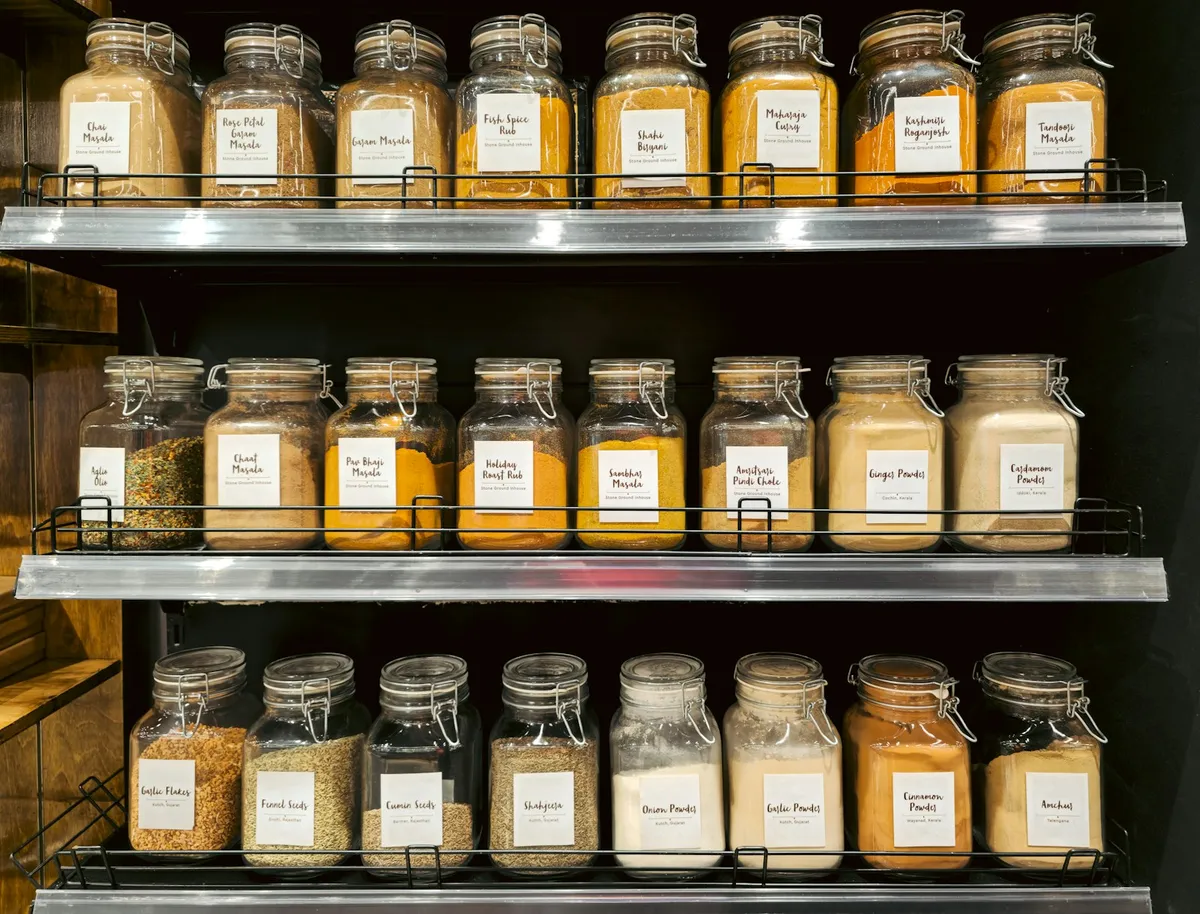
A small Indian kitchen is rarely short of things. It is short of room. Masala dabbas multiply, steel tiffins pile up, and the counter that should hold the mixer becomes a landing strip for whatever came out last. Most of the time the fix is better placement, not a bigger house.
Here is how to organise a small kitchen in the order that saves money: a ten-minute counter audit, then five organisers that earn their space, then a measuring checklist so nothing arrives that does not fit. We have not bought or measured these products ourselves, so for each one we say what to look at on the listing rather than vouch for it.
Start with what is on your counter
Before you buy a single rack, spend ten minutes with the kitchen as it is. Sort what you see into three piles.
- Daily: salt, oil, the everyday tiffins, the chopping board, the tea masala. These stay within arm’s reach of the stove.
- Weekly: the big rice container, dal jars, serving spoons, spare pressure cooker parts. A step away, in a cabinet at hand height.
- Rarely: festive utensils, the juicer, the second set of plates. High, low, or out of the kitchen.
Then look at the space instead of the stuff. Most small kitchens have a packed counter above a nearly empty strip of wall, and cabinets whose back rows nobody can reach. Everything below works by moving things up, stacking them, or sliding them into a drawer.
1. A masala rack that matches how you cook
A rack puts the dozen spices you actually use in one visible row, instead of spread over two shelves and a drawer. There are three kinds: a rotating counter rack, a tiered rack for a shelf, and a wall-mounted one that clears the counter completely. If counter space is your problem, the wall wins.
Our example is the SF STEEL FACTORY 3-tier wall-mount stainless steel rack. Check how many tiers it has, the gap between them (your tallest jar has to fit under the tier above), whether screws and wall plugs come in the box, and the weight it is rated for. It needs a wall you are allowed to drill, so renters should look at a countertop tiered rack instead, after measuring the counter.
2. Stackable airtight containers
Matching containers for dal, rice, flour and poha beat a shelf of odd tubs. They use the cabinet’s full height, you can see what is running low, and one lid size fits all. Glass and steel last longer. Plastic is lighter to lift when full.
We looked at the CELLO Modustack Glassy storage jar set. See how many jars come in the set, their capacities, the material and whether the lids seal properly. Capacity is trickier than it sounds, because a 1 kg packet of dal does not always fit a “1 litre” jar. When the set arrives, test every lid. A loose one defeats the purpose, and one set may not be enough for a family that buys in bulk.
3. A dish rack that leaves the sink usable
If the sink is your only drying spot, a steel rack with a drip tray and cutlery holder keeps water off the counter and plates upright. Countertop, over-the-sink and wall-mounted versions all exist, so pick the one your sink area can take.
The example here is the TEX-RO stainless steel dish drainer with drip tray and cutlery holder. Measure your sink area before reading the listing, then confirm the outer dimensions, that the tray and cutlery holder are included, and which way the tray drains. A rack wider than your free counter just becomes the new clutter, so measure twice.
4. Risers for deep cabinets
A deep cabinet hides its back half. A stackable shelf riser roughly doubles the usable layers, so the back row stops being a dark corner for jars you forgot you owned. Expandable ones adjust to different widths, which helps, since cabinets in Indian homes are rarely a standard size.
We picked the ETELI expandable stackable cabinet shelf organiser, set of 4. Look at the minimum and maximum width when expanded, the load it holds and the material. Specifications on listings for this kind of product sometimes contradict each other, so read the details closely and confirm the riser clears your tallest jar and the cabinet door. Risers waste height if you put short items on them. They work best for jars and tins of similar size.
5. A drawer organiser for utensils
Without one, spoons, ladles and tools end up in one noisy heap. An expandable tray fits drawers of different widths, and compartments mean the peeler stops hiding under the serving spoon.
The example is the Allkartz expandable cutlery tray, 8 compartments. Check the range of widths it expands to, the depth and the material. Measure inside the drawer opening before buying. A tray that is too deep stops the drawer closing, and long Indian tools like a jhara (slotted spoon) or a belan will not lie flat in it.
Measure before you buy
Five minutes with a tape saves a return.
- Width and depth of the counter, shelf or cabinet the organiser must fit.
- Height of the space above the counter and under the cabinet, so a rack clears what hangs over it.
- Wall type for anything wall-mounted (solid wall, tile or plasterboard), and whether your landlord or society allows drilling.
- Cabinet clearance for risers, including the swing of the door and your tallest item.
- Drawer width, measured inside the opening, not across the front panel.
Put the numbers in your phone before you shop. A product page cannot show your kitchen.
Frequently asked questions
How do I organise a very small kitchen?
Start with the counter audit: daily items in reach, weekly items a step away, rare items high or out. Then free the counter by going up (a wall rack), stacking (same-size jars) or sliding things into drawers. Changing one thing at a time works better than reorganising everything on a Sunday.
Should I use steel, glass or plastic containers?
Steel is light and tough but hides what is inside. Glass shows the contents and does not hold smells, but it is heavier and can break. Plastic is light and cheap, though it can stain and keep odours, especially with masala. Any of them works if the lids close snugly and the sizes stack.
How do I stop masalas from spilling?
Keep jars sealed and upright in one rack rather than loose on a shelf. When refilling, decant over a plate so spills are easy to scoop back. Matching lids mean a spare is always to hand.
What is the best organiser for a rented kitchen?
Anything that needs no drilling: stackable jars, cabinet risers, drawer trays and a countertop rack. Leave wall-mounted racks until you own the wall.
Where to go next
More ideas for the home are in the Home and garden section. If your kitchen window gets sun, our balcony garden guide for beginners shows how to start growing herbs. And for deciding what really belongs on your counter, finding the few tasks that matter uses the same sorting logic. The same counter-audit idea works on a work desk: see desk cable management on a budget.
By the elecv team.
More in Home and garden
- Home and garden
What Size Grow Bag Do Tomatoes, Peppers and Lettuce Need?
Choose a grow bag for a patio vegetable garden using US gallons, sunlight and potting mix volume. Includes a worked shopping list for two peppers.
- Home and garden
How Much Soil Does a 4 × 8 Raised Bed Need?
Work out how many cubic feet, cubic yards or bags to buy for a 4 × 8 raised bed. Compare three fill depths and account for soil you already have.
- Home and garden
How to Make Compost at Home in India (Even in a Flat): The Simple Bucket Method
Turn kitchen waste into compost in a flat: the wet-to-dry mix, a simple bucket method, fixes for smell and flies, and when it's ready to use.